Why Your Central AC Can't Keep Up in a Massachusetts Heat Wave (and When to Call a Pro)
When it hits 95°F and your central air is still blowing warm, the problem is rarely a dead unit. Here are the real reasons AC struggles in a Massachusetts heat wave — the fixes you can do yourself, and the ones that legally need a licensed pro.
Why Your Central AC Can't Keep Up in a Massachusetts Heat Wave (and When to Call a Pro)
The 95-Degree Reality Check
It happens every July. A heat wave rolls into Massachusetts, the thermostat says 74 but the house feels like 82, and the air coming out of the vents is barely cool. Your first thought is that the air conditioner is broken.
Usually, it isn't. In the vast majority of "my AC can't keep up" calls we see across Greater Boston, Worcester, and the South Shore, the unit is running exactly as designed — it's just fighting a losing battle against a clogged filter, a dirty coil, or a house that was never set up to be cooled to 74 when it's 96 outside.
Here's how to tell the difference between a five-minute fix and a real repair, in the order you should check them.
Reason 1: A Clogged Air Filter (Start Here — Always)
This is the single most common cause of weak cooling, and it's the one homeowners skip most often.
Your system pulls all the air in your house through a filter before it cools it. When that filter is packed with dust, pet hair, and pollen — and in Massachusetts, spring tree pollen absolutely coats a filter by July — airflow drops. Less air moving across the cold coil means less cool air reaching your rooms, and it makes the whole system work harder and run longer for a worse result.
What to do:
- Find the filter (usually in the return-air grille, or in a slot next to the indoor air handler or furnace)
- Pull it out and hold it up to a light. If you can't see light through it, replace it
- Match the size printed on the frame exactly (e.g. 16x25x1)
- In heat-wave season with pets or allergies, check it monthly
A fresh filter alone fixes a shocking number of "broken" air conditioners. Do this before anything else.
Reason 2: A Dirty Outdoor Condenser Coil
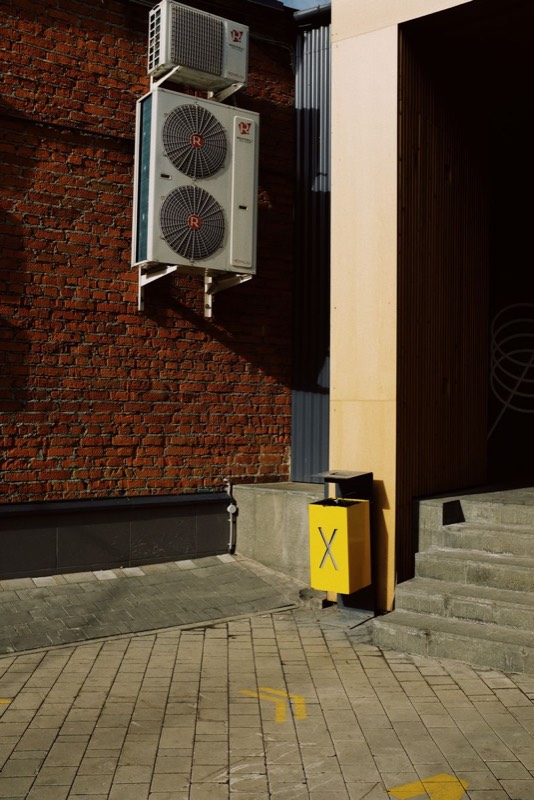
Walk outside to the big metal box (the condenser). Its job is to dump your home's heat into the outdoor air. It can only do that if air flows freely through its fins — and after a New England spring, those fins are usually matted with grass clippings, cottonwood fluff, and dirt.
What to do (power OFF first):
- Switch off power at the outdoor disconnect box or the breaker
- Clear at least 2 feet of space around the unit — trim back shrubs and pull any weeds growing through it
- Gently hose the coil from the inside out or straight through the fins (never use a pressure washer — it bends the fins and makes things worse)
- Let it dry, restore power, and give it 15 minutes
Pro tip: If the fins are crushed or the unit hums but the fan doesn't spin, stop. A seized fan motor or failed capacitor is a real repair — and poking around a live 240-volt condenser is not a DIY job.
Reason 3: Low Refrigerant or a Leak (This One Needs a Pro — and It's the Law)
If your filter is clean, the coil is clear, and the air is still warm — or the copper line at the outdoor unit is frosted over with ice — you may be low on refrigerant. And low refrigerant almost always means a leak, because a sealed system doesn't "use up" refrigerant the way a car uses gas.
Here's the important part: in Massachusetts, and under federal EPA rules, you cannot legally buy or handle AC refrigerant without a certification. Topping it off also doesn't fix anything — the leak just empties the system again. This is a call-a-pro situation, full stop. A licensed HVAC tech will find the leak, repair it, and recharge the system to the manufacturer's exact spec.
Warning sign to act on immediately: ice on the refrigerant lines or the indoor coil. Turn the system to "fan only" to let it thaw, and book a technician — running a frozen system can destroy the compressor, which is the single most expensive part to replace.
Reason 4: Your System Was Never Sized for a 96-Degree Day
Massachusetts HVAC systems are sized to a "design temperature" — for most of eastern Massachusetts that's around 91°F. That means your equipment is engineered to hold a comfortable indoor temperature when it's about 91 outside. During a genuine heat wave at 96–100°F, even a perfectly healthy, correctly-sized system may only be able to pull the indoor temperature down 18–20 degrees below the outdoor air.
That's not a malfunction — it's physics. On the worst days:
- Set the thermostat to a realistic target (78 will feel great and is achievable; 70 may not be)
- Set it and leave it — cranking it lower doesn't cool faster, it just runs the system to exhaustion
- Close blinds on the sunny side of the house and run ceiling fans to feel cooler at a higher setpoint
This is especially common in older Massachusetts homes — triple-deckers, capes, and colonials — where central air was retrofitted into a house that was never designed around ductwork.
Reason 5: The Heat Is Pouring In From Your Attic
In a lot of Massachusetts homes, the AC isn't the weak link — the attic is. An under-insulated, under-ventilated attic can hit 130°F+ on a sunny July afternoon, and that heat radiates straight down into your living space and ductwork faster than the AC can remove it.
If your upstairs is always hotter than downstairs no matter what the AC does, the fix often isn't the air conditioner at all — it's attic insulation and ventilation. That's usually cheaper than an AC repair and it pays you back every summer *and* every winter.
The 10-Minute DIY Tune-Up Before You Call Anyone
Run through this in order:
1. Replace the air filter (the #1 fix) 2. Clear and gently rinse the outdoor condenser (power off) 3. Confirm the thermostat is on "Cool" and set below room temp — and swap the batteries 4. Open every supply vent and make sure furniture/rugs aren't blocking them 5. Check the condensate drain — a clogged drain line can trip a safety switch and shut the system down entirely 6. Give it 20 minutes and re-check the vent-air temperature
If cool air returns, you just saved yourself a service call.
When to Call a Licensed Pro
Book a professional if you see any of these:
- Warm air after a clean filter and clean coil
- Ice on the refrigerant lines or indoor coil
- The outdoor fan won't spin, or the unit hums, buzzes, or clicks and shuts off
- Water pooling around the indoor air handler
- A breaker that trips every time the AC kicks on
- Any suspicion of a refrigerant leak (this is legally not DIY)
A seasonal HVAC tune-up before the next heat wave is one of the best-value maintenance calls you can make — it catches a failing capacitor or a slow leak in the spring, instead of during a 98-degree weekend when every technician in the state is booked solid.
AC still blowing warm?
Book a vetted, licensed HVAC pro through Handy Circle — get a real diagnosis and a fair quote, and track your pro on the way in the app.
Book an AC Repair