Getting a Massachusetts Home Ready for Winter: A Late-October Checklist
The first hard freeze is close, and the next two weekends are the easiest time all year to get ahead of it. Here is what Massachusetts homeowners can still do in late October, in the order that saves the most trouble later.
Getting a Massachusetts Home Ready for Winter: A Late-October Checklist
Late October in Massachusetts is a short window. The maples have dropped most of their leaves, the furnace has kicked on a few mornings, and the first hard freeze is somewhere in the next few weeks depending on how far you are from the coast. Everything on this list is easier to do now, in a sweatshirt on a Saturday, than in January with a flashlight in your teeth.
Here is the checklist, roughly in the order it matters.
1. Gutters and downspouts, after the leaves are mostly down
Gutters full of wet leaves do two things once it freezes. They hold water against the fascia, and they turn into a frozen dam that pushes meltwater back under the shingles. Wait until the big trees near the house are mostly bare, then clear every run and flush the downspouts with a hose. Make sure each downspout sends water at least a few feet away from the foundation. If you have a gutter you can only reach from a tall ladder on a slope, this is a job worth handing to someone with the right ladder and a second person at the bottom.
2. Outdoor spigots and hoses
This is the one people forget, and it causes real damage. Disconnect every garden hose, drain it, and store it. Then shut the interior valve that feeds each outdoor faucet, open the outside tap to let it drain, and leave it open. If your spigots are the frost-free type, they still need the hose off, because a connected hose traps water in the stem. An insulated faucet cover from the hardware store is cheap insurance on an older house.
3. Furnace or boiler service, and a fresh filter
Massachusetts heating systems run hard for five months, and most of the no-heat calls in January come from things a tune-up in October would have caught: a weak igniter, a dirty burner, a failing circulator pump, a flue connection that has worked loose. Book the service now while technicians still have open days. In between, change a forced-air filter at the start of the season and check it monthly. If you heat with oil, confirm the tank level and get on the delivery schedule before the first cold snap, when everyone else calls at once.
4. Drafts, weatherstripping and caulk
Walk the house on a windy evening with the back of your hand near every window edge, door bottom, and outlet on an exterior wall. Where you feel moving air, you are paying to heat the yard. Replace tired door sweeps and weatherstripping, caulk gaps around window trim on the outside, and use removable rope caulk or film kits on old sashes you cannot replace yet. Foam gaskets behind outlet covers take ten minutes for the whole house.
5. Roof and ice-dam prevention
Ice dams are a Massachusetts specialty. Heat leaks from the living space into the attic, melts the snow on the roof, and the meltwater refreezes at the cold eaves. The fix is rarely on the roof. It is in the attic: air sealing the gaps around light fixtures, plumbing stacks, and the attic hatch, then adding insulation so the roof deck stays cold. While you are up there, look for daylight at the eaves, stained sheathing from past leaks, and bathroom fans that vent into the attic instead of outside. From the ground, scan the roof for lifted or missing shingles and check the flashing around the chimney.
6. Chimney check
If you burn wood, or your furnace or water heater vents through a masonry chimney, have the flue inspected before the season starts. A yearly inspection is the standard advice from chimney professionals, and a cleaning when there is buildup. Make sure the damper closes fully, the cap and screen are in place to keep animals and rain out, and the mortar joints at the top are not crumbling. A chimney that sat unused all summer is a common home for a bird or squirrel nest, and you do not want to discover that with a fire going.
7. Snow blower and generator prep
Pull the snow blower out of the shed now, not the night before the first nor'easter. Fresh fuel with stabilizer, a new spark plug if it has been a few seasons, check the shear pins, grease the auger, and start it once so you know it runs. If you have a portable generator, run it under load for twenty minutes, check the oil, and make sure you have the right cords. A generator only ever runs outdoors, well away from windows and doors, because the exhaust is a carbon monoxide risk. A standby generator or a transfer switch is electrical work, and in Massachusetts that means an electrician who holds a state license.
8. Smoke and carbon monoxide detectors
Heating season is when carbon monoxide becomes a real risk, and Massachusetts requires carbon monoxide alarms in homes. Press the test button on every smoke and CO alarm, replace batteries, and check the manufacture date on the back. Smoke alarms are generally replaced after ten years and CO alarms sooner, depending on the model. If an alarm chirps, replace it rather than pulling the battery.
9. Frozen-pipe prevention for the coldest nights
The pipes that freeze are the ones in unheated or poorly insulated spaces: the garage, a crawl space, an exterior wall under a kitchen sink, a basement corner near a drafty sill. Insulate those runs with foam sleeves now, and seal the gaps in the rim joist and around pipe penetrations where cold air pours in. On the coldest nights, open the cabinet doors under sinks on exterior walls, let a faucet drip at the far end of the run, and keep the thermostat steady instead of setting it way back. Find your main water shutoff now and make sure it turns, so if a pipe does burst you are not searching for it in a flooding basement.
10. A Mass Save home energy assessment
If you have not done one, this is the most useful call on the list. The Sponsors of Mass Save offer no-cost home energy assessments, virtual or in person, for most Massachusetts households served by the participating utilities. An energy specialist walks the house, looks at insulation and air sealing, and produces a report with the rebates and incentives you qualify for, which can include significant discounts on approved insulation work and no-cost targeted air sealing. The details and the scheduling form are on the Mass Save home energy assessments page. Insulation and air sealing done through the program also happen to be the fix for item 5, the ice dams.
When to do it yourself and when to call someone
Hoses, filters, batteries, weatherstripping, and the attic walkthrough are honest afternoon jobs. The ones worth handing off are the ones with a tall ladder, a gas line, a flue, or a breaker panel in them: gutters on a steep roof, furnace and boiler service, chimney work, and anything electrical. Those are the jobs where a local pro does in an hour what would take you a weekend.
Handy Circle connects Massachusetts homeowners with local pros for exactly these jobs: gutter cleaning, handyman work, plumbing, electrical and HVAC. You describe the job in the app, local pros quote it, and you pick who you want. The app is at link.handy-circle.com/app.
Stay warm out there.
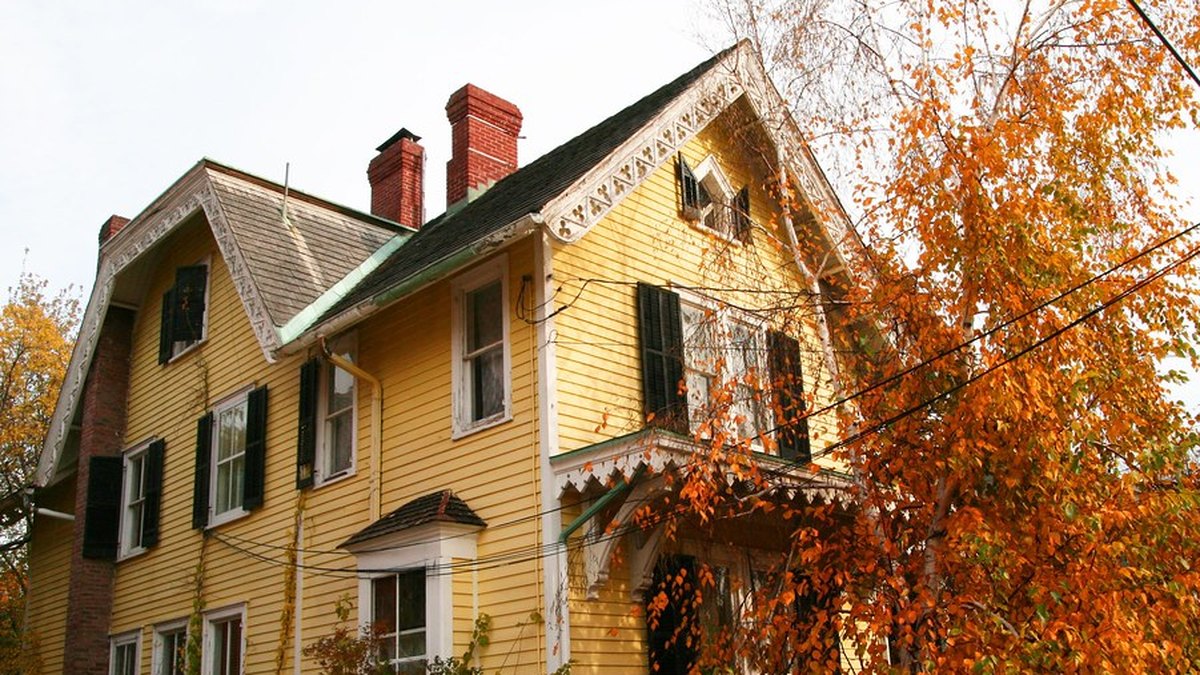
*Photo: "Autumn House" by syscosteve on Flickr, CC BY 2.0, cropped.*